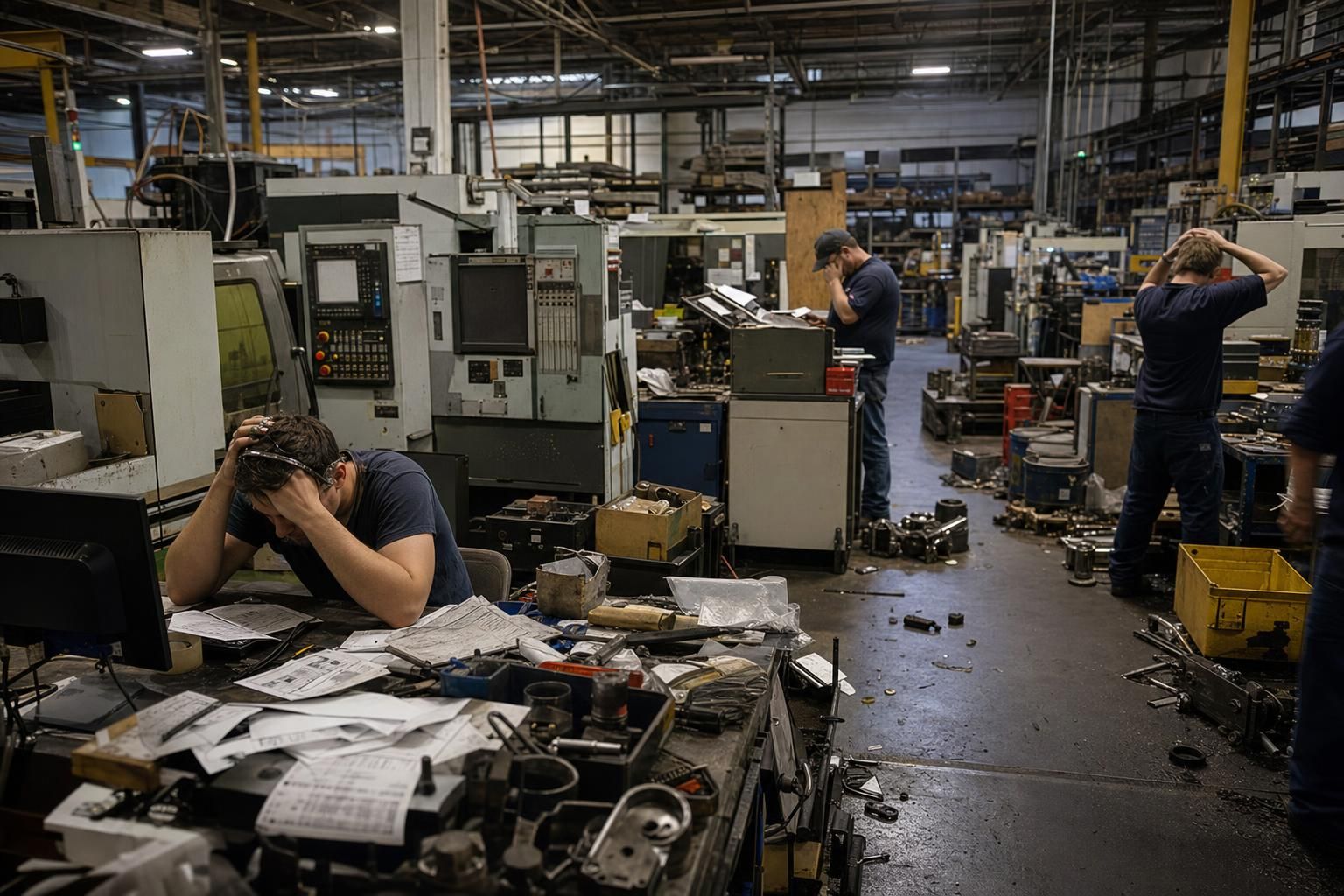
How AI Is Changing the Game for Small and Mid-Size Manufacturers
For much of recent history, advanced technology in manufacturing felt like the exclusive territory of large corporations with deep pockets and dedicated IT departments. The shop floors of small and mid-size manufacturers (SMMs) hummed along on experience, intuition, and spreadsheets. That dynamic is shifting. Artificial intelligence has become increasingly accessible, and manufacturers who embrace it are finding meaningful advantages in areas where margins are tight and every hour of downtime counts.
This article explores how AI can practically benefit small and mid-size manufacturers in the US, and why the moment to act is now rather than later.
The Unique Pressures Facing Small and Mid-Size Manufacturers
Small and mid-size manufacturers operate in a demanding environment. They face many of the same supply chain uncertainties, labor constraints, and cost pressures as their larger competitors, but typically with fewer resources to absorb the impact. A single scheduling bottleneck, a surprise spike in raw material costs, or a missed delivery window can ripple through the entire operation in ways that larger organizations can often buffer.
What SMMs often lack is not capability or ambition — it is visibility. Without clear, real-time insight into what is happening across production, purchasing, and finance, decisions get made on instinct rather than data. AI changes that equation by turning operational data into actionable intelligence, often without requiring a large technology team to manage it.
Where AI Delivers Real Value on the Shop Floor
Smarter Production Scheduling
One of the most time-consuming and error-prone tasks in any manufacturing operation is scheduling. Coordinating machine availability, workforce shifts, material lead times, and customer deadlines is a complex puzzle that traditionally relies heavily on the experience of a few key people.
AI-driven scheduling tools can analyze these variables continuously and surface optimized production sequences that a human planner might take hours to work out manually. When a rush order arrives or a machine goes down, the system can recalculate and suggest adjustments quickly, helping teams respond rather than react. For SMMs where the scheduler and the plant manager might be the same person, this kind of support frees up cognitive bandwidth for higher-level decisions.
Purchasing and Supply Chain Visibility
Supply chain disruptions have become a familiar challenge for manufacturers of all sizes. For smaller operations, a delayed shipment of a critical component can halt an entire production run. AI can help by providing clearer visibility into purchasing patterns, supplier performance, and inventory levels.
When purchasing data is organized and monitored intelligently, patterns emerge. Teams can spot when a supplier consistently runs late, when reorder points are miscalibrated, or when costs are creeping up in ways that only become obvious in aggregate. That visibility allows purchasing managers to act before a problem escalates rather than scrambling after the fact.
Tracking the KPIs That Actually Matter
Key performance indicators are only useful if they are current, accurate, and visible to the people who need them. In many SMM environments, KPI reporting is a manual process — someone pulls numbers from multiple systems, builds a report, and distributes it on a weekly or monthly cadence. By the time the data reaches decision-makers, conditions on the floor may have already changed.
AI-powered KPI monitoring can automate the collection and presentation of operational metrics in near real time. Production rates, scrap rates, on-time delivery, and machine utilization can all be surfaced in a single view, with anomalies flagged automatically. This means issues get addressed when they are still small rather than when they have grown into costly problems.
Financial Clarity Across the Operation
For many small and mid-size manufacturers, the gap between operational performance and financial outcomes can feel opaque. Production runs on one set of numbers; the books tell a different story. AI tools designed for manufacturing finance can help bridge that gap by connecting operational data to financial results, giving owners and managers a clearer picture of where margins are made and where they erode.
Better financial visibility also supports more confident planning. When you can see how scheduling decisions affect labor costs, or how purchasing patterns influence cash flow, it becomes easier to make choices that are good for the business over the long term, not just convenient in the short term.
Operational Intelligence as a Competitive Advantage
Taken together, the capabilities above add up to something more than the sum of their parts: operational intelligence. When scheduling, purchasing, KPIs, and finance are connected and informed by AI, manufacturers gain a coherent view of their business that is difficult to achieve with disconnected tools.
That coherence is itself a competitive advantage. Manufacturers who can identify inefficiencies faster, respond to change more nimbly, and plan with greater confidence are better positioned to win and retain customers in competitive markets. For SMMs competing against larger organizations with more resources, operational intelligence can help level the playing field.
Common Concerns — and Why They Are Worth Working Through
"We don't have the data infrastructure for AI."
This is a common concern, and it is worth taking seriously. AI tools do require data to work well. However, many modern platforms are designed to work with the kinds of data that manufacturers already generate — from ERP systems, production logs, purchasing records, and financial software. The starting point does not need to be a massive data transformation project. It often begins with connecting existing sources and building from there.
"Our team won't adopt new technology."
Adoption is genuinely a challenge, and it tends to be underestimated in technology decisions. The most successful implementations treat adoption as a core part of the project, not an afterthought. Tools that surface information in ways that make a team's existing job easier are far more likely to stick than those that add complexity or require significant behavior change upfront.
"We can't afford an enterprise-level solution."
The cost of AI tools has decreased significantly as the technology has matured and competition among providers has increased. Many platforms targeting SMMs are designed with proportionate pricing models. The relevant question is not the cost in isolation, but whether the operational improvements the tool enables justify the investment over time.
The Right Time to Start Is Before You Feel the Pressure
One pattern that tends to hold across industries is that organizations that invest in operational technology during periods of relative stability are better prepared when conditions tighten. Waiting until a crisis forces the issue means adopting new tools under pressure, which rarely produces the best outcomes.
For small and mid-size manufacturers, the competitive landscape is not standing still. Customers increasingly expect reliability, responsiveness, and transparency. Suppliers and workforce dynamics continue to shift. Starting the journey toward AI-enabled operations now, even incrementally, builds the capability and the culture that will matter as those pressures intensify.
How Allira Helps Manufacturers Operate More Intelligently
Allira is built specifically for small and mid-size manufacturers who want the operational clarity that larger competitors enjoy, without the complexity or cost typically associated with enterprise software.
The Allira platform brings together the capabilities that matter most to manufacturers:
- Scheduling Optimization — Tools to optimize production scheduling so your team spends less time managing the puzzle and more time executing the plan.
- Purchasing Visibility — Clear insight into your purchasing processes and supply chain, so you can act on patterns before they become problems.
- KPI Tracking — Operational KPI monitoring and reporting designed for manufacturing environments, putting the right numbers in front of the right people.
- Finance Tools — Financial management and visibility tools that connect your operational performance to your financial outcomes.
- Operational Intelligence — A broader platform that ties these capabilities together, giving you a cohesive view of your entire operation.
If you are a manufacturer looking to sharpen your operations and build the visibility your business needs to compete, Allira is worth a closer look.
Ready to see what Allira can do for your operation? Reach out to learn more about how the platform supports manufacturers like you.